

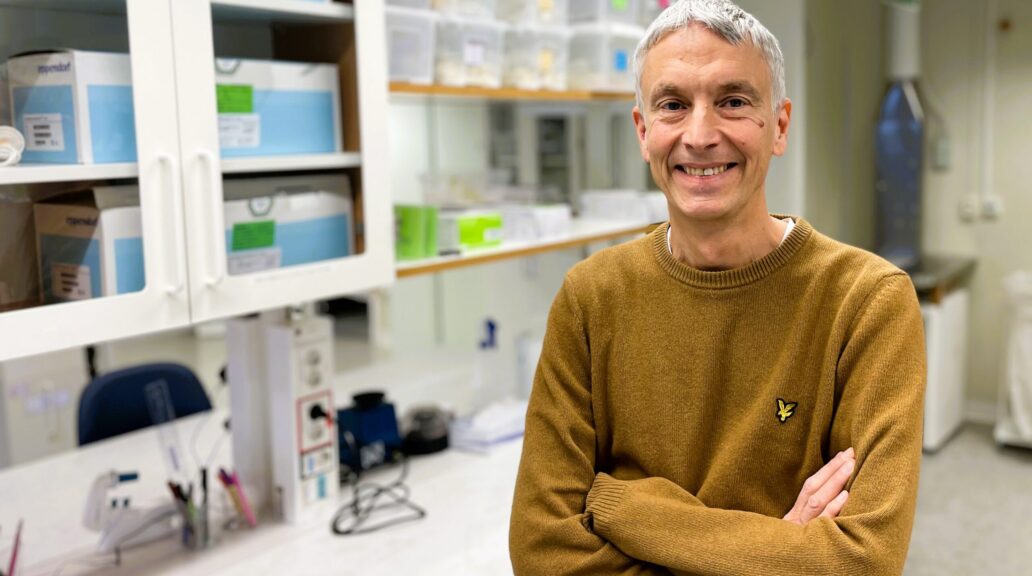
As UmanDiagnostics celebrates its 20th anniversary, the company continues to expand the development and use of neurological biomarkers, with blood-based testing playing an increasingly important role. These advances enable simpler sampling and may pave the way for broader clinical use.
The foundations were laid in 2004 at Umeå University. At the time, molecular biologist Niklas Norgren was a PhD student working with Professor Torgny Stigbrand, where research into the protein neurofilament light (NfL) gained momentum—a biomarker reflecting damage to nerve cells. That same year, the commercialization journey began within the newly established Umeå Biotech Incubator, where the project became one of the first to be admitted.
“There was a significant unmet need in academia for tools to detect neurological diseases early. We had identified a strong biomarker and wanted to see if it could be translated into a product,” says Niklas Norgren, VP and Managing Director, and co-founder of UmanDiagnostics.
After several years of development, Niklas Norgren and Torgny Stigbrand formally established UmanDiagnostics in 2006.
“We would not have been able to launch the company without the incubator. In the early stages, resources are extremely limited, and without that support you cannot even afford basic equipment. We were also fortunate to secure early, long-term investors such as Norrlandsfonden and Uminova Invest. They gave us the time and stability to develop, which ultimately led to a world-unique product,” Norgren explains.
A simple platform enabled early growth
The first product was based on ELISA technology and made it possible to measure NfL in cerebrospinal fluid (CSF), long considered the gold standard in neurological biomarker analysis.
“Working with a relatively straightforward platform allowed us to scale quickly. It required minimal investment from users, which made it easier to adopt widely.”
The first research-use products were launched in 2009, and by 2012 the company had reached profitability. Shortly thereafter, the CSF assay was certified for clinical use—an important milestone that brought the technology from research labs into healthcare practice.
Serum ELISA marked a breakthrough
A new, transformative step came when UmanDiagnostics began developing the next stage: measuring NfL in blood. The serum ELISA, launched in 2022, builds on the same biomarker but enables entirely new applications.
“Moving from cerebrospinal fluid to blood is a major shift. Sampling goes from an invasive procedure to a routine blood draw, making it much easier for both patients and healthcare professionals.”
A highly specialized team in Umeå
As the technology has advanced, the company has grown organically with a strong focus on quality and control. Today, the Umeå operation consists of eleven employees forming a fully integrated organization, covering research and development, production, and quality systems, including ISO 13485 certification.
“The team is absolutely essential in a company like this. We have built a highly capable operation and quality system. We are very proud to manage the entire value chain and maintain an ISO 13485-certified system with such a small team,” says Norgren.
In 2019, UmanDiagnostics was acquired by U.S.-based Quanterix, a company specializing in ultra-sensitive biomarker analysis. The combination of UmanDiagnostics’ antibodies and Quanterix’s analysis platform has achieved strong international impact.
“Quanterix showed early interest in our antibodies and assays and came in with a long-term perspective. The acquisition gave UmanDiagnostics a completely new global reach and has proven to be a major success.”
Short- and long-term IVDR strategy
UmanDiagnostics is now entering a new phase. The European In Vitro Diagnostic Regulation (IVDR) places high demands on clinical evidence and documentation.
“For our CSF ELISA, the focus is on ensuring full compliance with the new requirements. We already have much of the necessary documentation, but we are working intensively to have everything in place ahead of the 2027 review,” says Norgren.
In parallel, the company is advancing its next-generation tests.
“For the serum version, we are at a different stage, but we have a clear long-term plan for IVDR approval. The immediate next step is to recruit partner laboratories with access to clinical samples that can perform analyses, after which we will design the study to meet the regulatory requirements for in vitro diagnostic clinical studies.”
Momentum continues
The company is seeing a clear positive trend in demand, particularly for blood-based testing.
“We are seeing growing interest, especially in serum-based assays. It aligns perfectly with current needs.”
As UmanDiagnostics enters its third decade, the ambition remains to push the boundaries of neurological diagnostics. Reflecting on 20 years with the company, Norgren notes that the journey has been longer—and more rewarding—than he initially imagined.
“I probably didn’t fully envision it at the start. But it has been truly inspiring to build a company from the ground up. The Quanterix acquisition also gave us renewed energy—it felt like starting a new chapter,” concludes Niklas Norgren.
About – Key Milestones for UmanDiagnostics
• 2004: Project launched within Umeå Biotech Incubator
• 2006: UmanDiagnostics founded by Niklas Norgren and Torgny Stigbrand
• 2009: First research-use product launched
• 2010: First employee hired beyond the founders
• 2012: Company reaches profitability
• 2014: Product certified for clinical use
• 2018: ISO 13485 certification achieved
• 2019: Acquired by Quanterix
• 2022: New serum ELISA version for blood testing launched
• 2026: Celebrates 20 years as a company